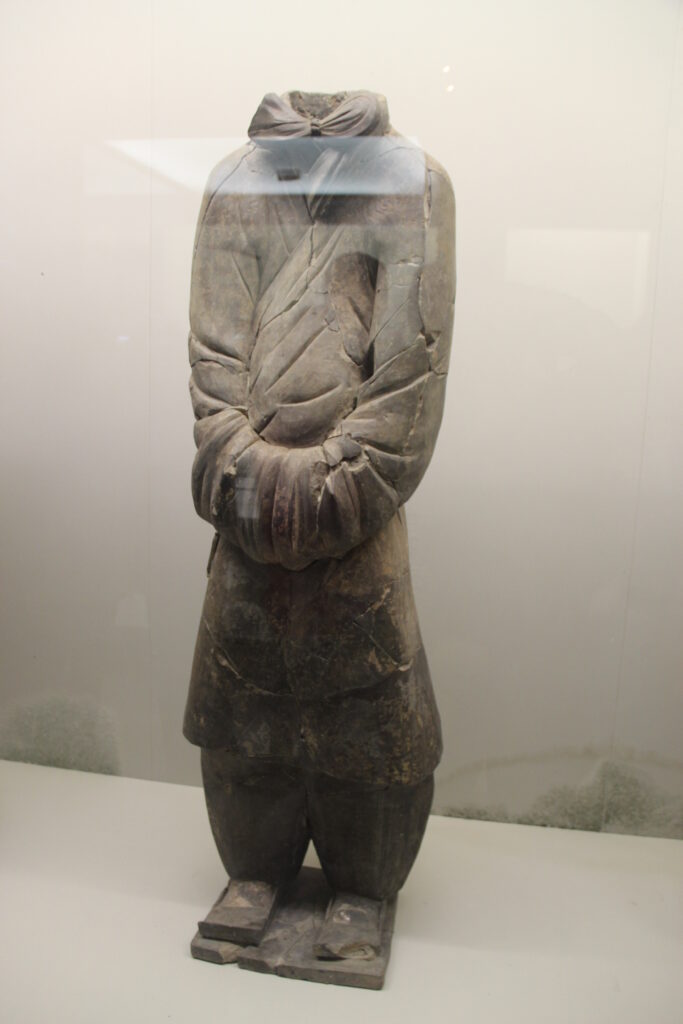
The Terracotta Army is best known for armed ranks, horses, and chariots. A separate burial pit near the First Emperor’s tomb tells a quieter part of the same story. Pit K0006 contains pottery figures widely identified as civil officials, with long robes and hands held inside their sleeves rather than weapons ready for battle.
For visitors, these figures are a useful correction to the idea that the Qin mausoleum was imagined only as a military world. They point toward administration, ceremony, transport, and the practical structures that supported an imperial court. They also belong to the wider mausoleum complex, not the three principal warrior pits that form the core of a standard Terracotta Army visit.
Quick answer
- What is Pit K0006? It is a separate pit near the First Emperor’s tomb, commonly called the Civil Officials Pit.
- How many figures were found? The museum records 12 pottery figures: eight civil official figures with their hands enclosed in sleeves and four charioteers.
- Are they part of the main Terracotta Army pits? No. They belong to the broader Qin mausoleum landscape rather than Pits 1, 2, and 3.
- Why do the folded sleeves matter? They help distinguish the officials from armed soldiers and draw attention to courtly or administrative roles.
- Can you plan a visit around K0006? Check the museum’s current arrangements, because access, displays, and routes can change.
The main distinction: warriors and civil officials
The familiar Terracotta Army pits are designed around military types and formations. In Pit 1, scale and rank are the first things to absorb. Pit 3 provides a smaller command-focused setting. The figures in K0006 ask a different question: what kinds of people and activities might have been needed in the ruler’s imagined world beyond military protection?
It is useful to keep the labels precise. “Civil official” is an archaeological interpretation of the figures’ clothing, posture, and setting, rather than a personal name or preserved job title for each statue. That careful wording makes the figures more interesting, not less. They show that the mausoleum complex used costume and gesture to build social roles as well as military ranks.
What the museum records for Pit K0006
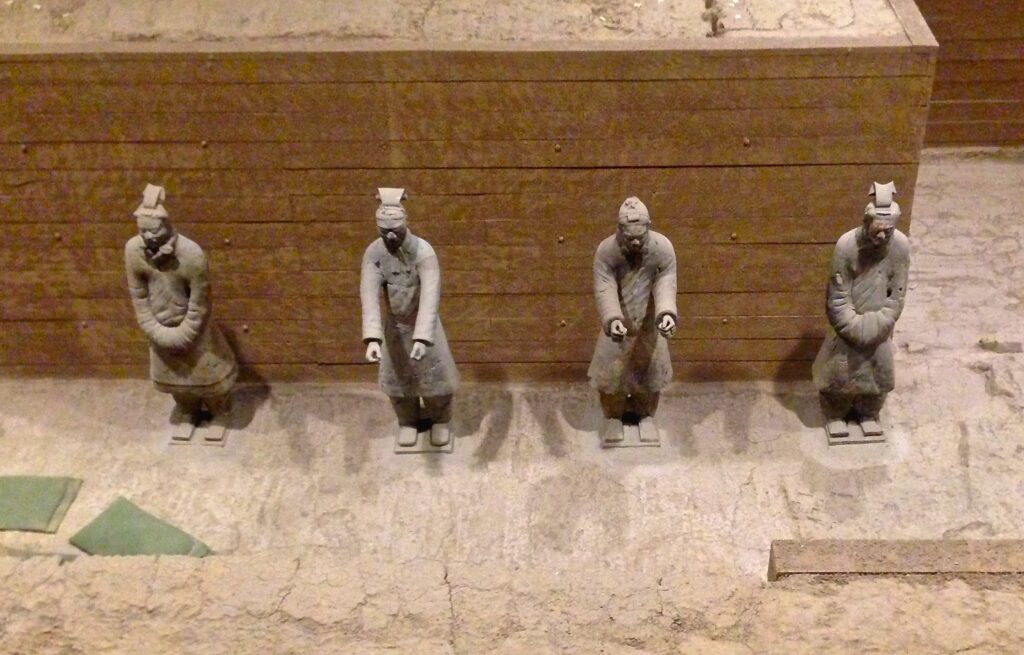
The Emperor Qinshihuang’s Mausoleum Site Museum says that Pit K0006 was discovered in 2000, southwest of the main tomb, and covers about 410 square metres. It has a sloping roadway, a front chamber, and a rear chamber. The museum records 12 pottery figures in the front chamber: eight figures with hands concealed in their sleeves and four charioteers with hands extended as if holding reins.
The same official account lists a wooden chariot, a pottery vessel, four bronze axes, and horse remains among the finds. Taken together, those objects make it sensible to think beyond a static row of statues. The pit combines people, vehicles, animals, and objects in a setting that may relate to official and ceremonial activity. It is stronger to describe that wider context than to claim a single fully decoded scene.
What to notice on the figures
Start with the sleeves. Rather than reaching for a bow, sword, or reins, several figures hold their hands inside the long cuffs of their robes at the waist. Then look at the headgear, collars, belts, and shoes. These details separate the visual language of an official from the armour, leggings, and weapon-related poses that dominate the army pits.
The charioteers provide a useful contrast within the same pit. Their arms extend forward, as if managing reins, while their clothes and caps still differ from the standard military image. The combination makes K0006 feel less like a miniature army and more like a compact courtly or administrative setting. It is one reason the figures are worth noticing after you have seen the famous formations.
Colour, damage, and careful reconstruction
The museum notes that the figures originally carried red, green, black, pink, white, and other surface colours, although little colour remains today. That is a useful companion to the guide to the Terracotta Army’s lost colours. The familiar grey of an excavated figure is not the whole original visual story.
Recent open-access research on the K0006 figures examined surviving pigment and lacquer layers. It found a lacquer ground and mineral pigments on the sampled material, reinforcing how much technical work once sat beneath the current muted surfaces. For a visitor, the practical lesson is simple: cracks, joins, and faint colour traces are evidence, not imperfections to ignore. The restoration guide explains why those traces matter across the site.
A separate underground setting
One of the most revealing things about K0006 is its setting. The museum describes a wood-and-earth structure with a sloping passage, front chamber, and rear chamber. Unlike several other pits around the tomb, it was not destroyed by fire, so parts of the wooden structure survived. That architectural evidence helps the figures feel like part of a built underground environment, not simply objects arranged in an empty excavation.
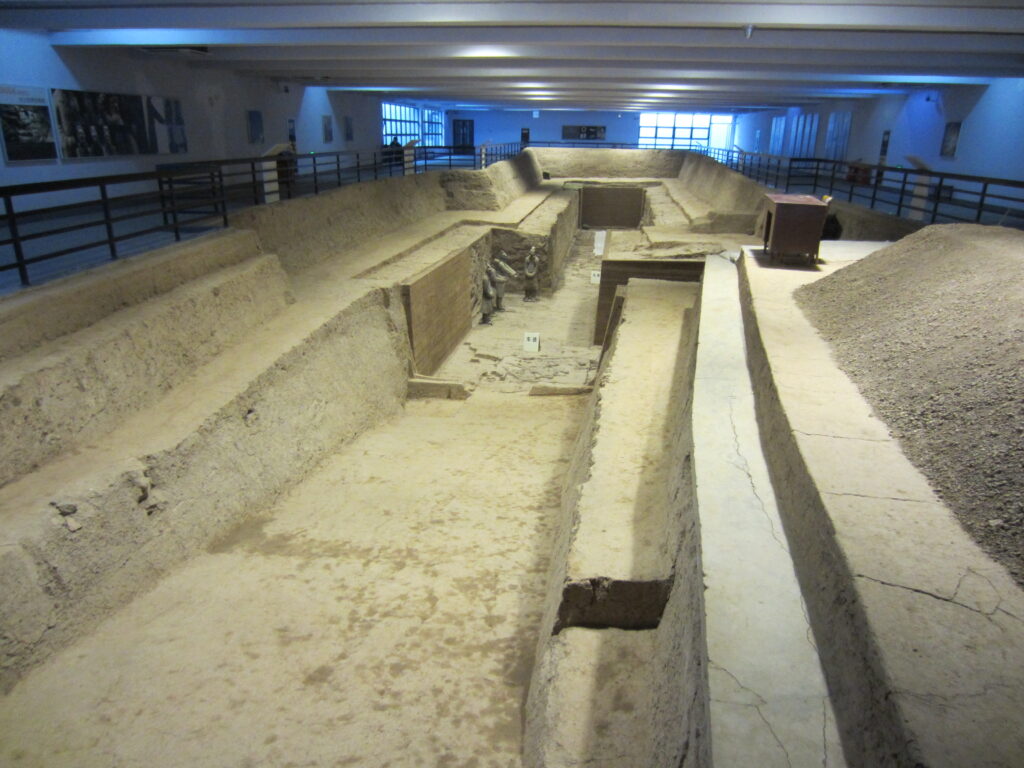
This wider view is important throughout the mausoleum area. The 1974 discovery guide explains how the warrior pits became famous, but the Qin Shi Huang mausoleum guide helps place them among many different pits, buildings, and finds.
How K0006 changes a visit
Once you have looked at the main pits, a civil official is a useful visual reset. A warrior is often read through formation and equipment. An official figure is read through posture, sleeve, robe, and restrained gesture. That contrast helps visitors see that the Qin artisans were making a hierarchy of roles, not merely producing variations of the same soldier.
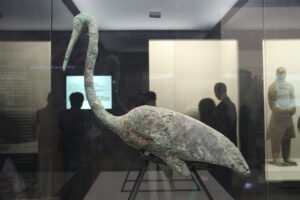
There are other useful examples of this broader variety. The acrobats and strongmen guide introduces another group of non-military figures, while the bronze water birds guide looks at cranes, swans, and geese from a separate pit. These are not detours from the Terracotta Army story. They are the context that makes the army feel less isolated.
Do not confuse K0006 with every official-looking warrior
Some figures in the warrior pits clearly have higher status or different military functions. That does not mean they are the same as the K0006 civil officials. Use the location and pose together. K0006 is a separate burial pit, and its folded-sleeve figures are not armed for a battlefield formation. A high-ranking warrior in a main pit belongs to a different visual and archaeological context.
The same distinction applies to the bronze chariots. They are another crucial part of the mausoleum story, but they come from a different find context and use a different material. Keeping these links clear makes a visit more accurate without making it complicated.
A practical route for first-time visitors
Begin with the first-time museum guide and the recommended route order. Let the main pits provide the essential experience, then use any displayed non-military figures or archaeological information to broaden the picture. Do not build a tight itinerary around a single K0006 figure, because exhibitions and access arrangements can change.
If you see a civil official figure, take a moment to compare three things: the hands, the sleeves, and the absence of a weapon. Those details communicate a social role as clearly as armour communicates a military one. It is a small observation that makes the larger mausoleum landscape much easier to understand.
Sources and visitor checks
For the excavation summary, read the museum’s Civil Officials Pit K0006 page. The recent K0006 pigment and ceramic study provides technical context for readers interested in the surviving colour layers. The UNESCO listing for the Mausoleum of the First Qin Emperor gives the wider heritage context.
Before travelling, confirm current admission and visitor arrangements through the museum ticketing page and the Emperor Qinshihuang’s Mausoleum Site Museum. Follow current on-site signs and staff guidance for exhibition access.
Best recommendation
Use the K0006 civil officials to look past the familiar image of an underground army. Notice the folded sleeves, the robe, and the separate pit setting. Those three details reveal a mausoleum planned not only for defence, but also for the offices, transport, ceremony, and order of an imperial world.
Bronze Water Birds at the Qin Mausoleum: Cranes, Swans, and Geese
A visitor guide to the bronze water birds from the Qin mausoleum: why cranes, swans, and geese matter,…
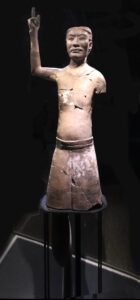
Terracotta Army Acrobats and Strongmen: The Figures Beyond the Soldiers
Meet the Qin mausoleum acrobats and strongmen: why they are different from the Terracotta Army soldiers, what Pit…
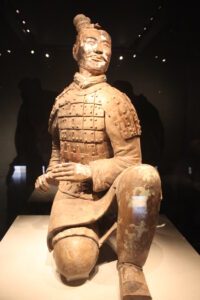
How Terracotta Warriors Were Made: Clay, Molds, and Details to Notice
A clear guide to how Terracotta Army figures were made: prepared clay, repeatable production steps, hand-finished details, firing,…