A standing Terracotta Army figure can look so complete that it is easy to forget how much archaeological work may sit behind that view. Many figures were found broken into separate pieces, surrounded by soil and other fragments. Turning that material into an understandable museum figure is not a simple repair job. It is a careful process of recording, matching, stabilising, and preserving evidence.
For visitors, restoration explains two things that can otherwise feel confusing: why some figures remain incomplete, and why a crack, join, support, or missing section can be meaningful rather than a flaw. Looking at a restored warrior alongside fragments makes the museum feel less like a hall of statues and more like an active archaeological site.
Quick answer
- Were the figures found intact? Many were not. Archaeologists and conservators work with separate fragments as well as more complete pieces.
- What happens first? The find context and individual pieces need to be recorded before a figure can be safely reconstructed.
- Does restoration mean making a new statue? No. The goal is to preserve and explain the surviving original material, not to make it look newly made.
- Why do some figures stay incomplete? Missing parts, fragile surfaces, and uncertain matches can make a partial presentation more honest and safer.
- What should visitors notice? Joins, surface differences, fragment groups, unfinished areas, and the contrast between a pit view and a close object display.
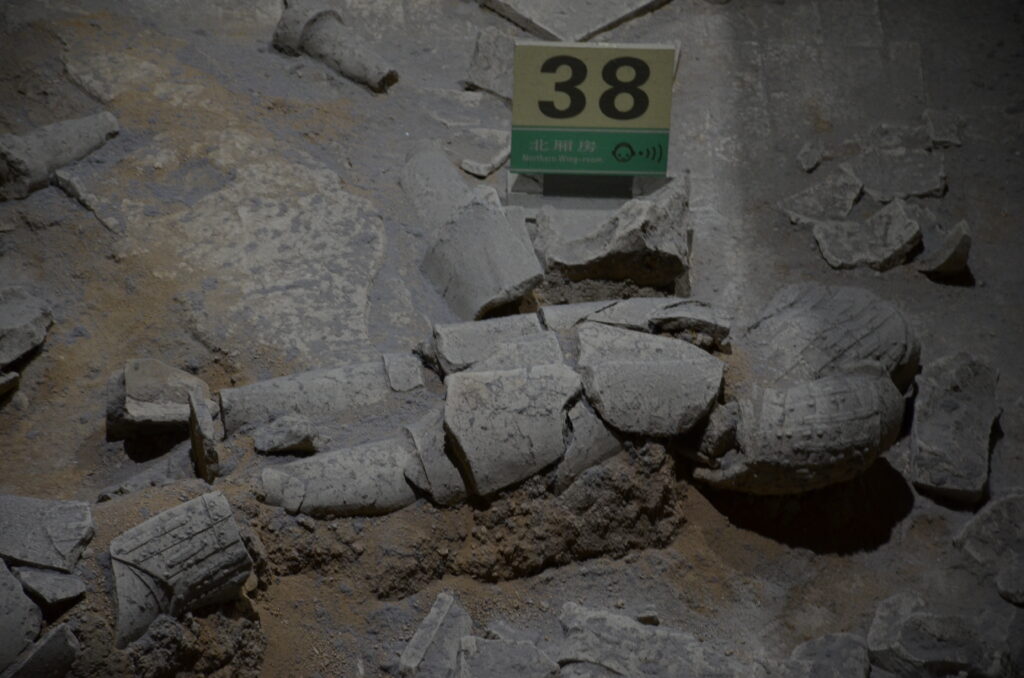
Why broken fragments are valuable evidence
A fragment is not just a missing piece waiting to be hidden. Its shape, surface, position, soil context, and possible relation to nearby pieces can all help explain how a figure was damaged and how it originally stood. Conservators cannot responsibly treat every loose piece as interchangeable clay.
That is why a partly restored figure can be just as informative as a complete-looking one. It may preserve a clearer record of what is original, what is missing, and what has been carefully joined. The guide to ranks and hidden details offers another way to slow down and notice evidence that is easy to miss from a distance.
From excavation to a stable figure
The exact sequence varies with the object and its condition, but the broad logic is consistent. The material must be documented and examined, fragments have to be sorted and matched, and vulnerable surfaces need protection before or during reassembly. Only then can a figure safely support its own structure or move toward display.
Matching is more demanding than it sounds. A head, torso, arm, armour panel, or leg fragment may fit through physical joins, but a safe reconstruction also has to respect the archaeological record. When there is no reliable evidence for a missing portion, it is often better to leave that absence visible than to invent a convincing-looking answer.
Why the museum does not make everything look new
Good conservation is not cosmetic perfection. A fully smooth, freshly coloured surface might look dramatic, but it could obscure the difference between an ancient object and a modern addition. In an archaeological museum, restrained joins, supports, and visible losses can protect the truth of the object.
This matters especially for the Terracotta Army because original painted surfaces are exceptionally fragile. The guide to the army's lost original colours explains why surviving colour needs to be treated as evidence, not as a reason to repaint a figure for visual effect.
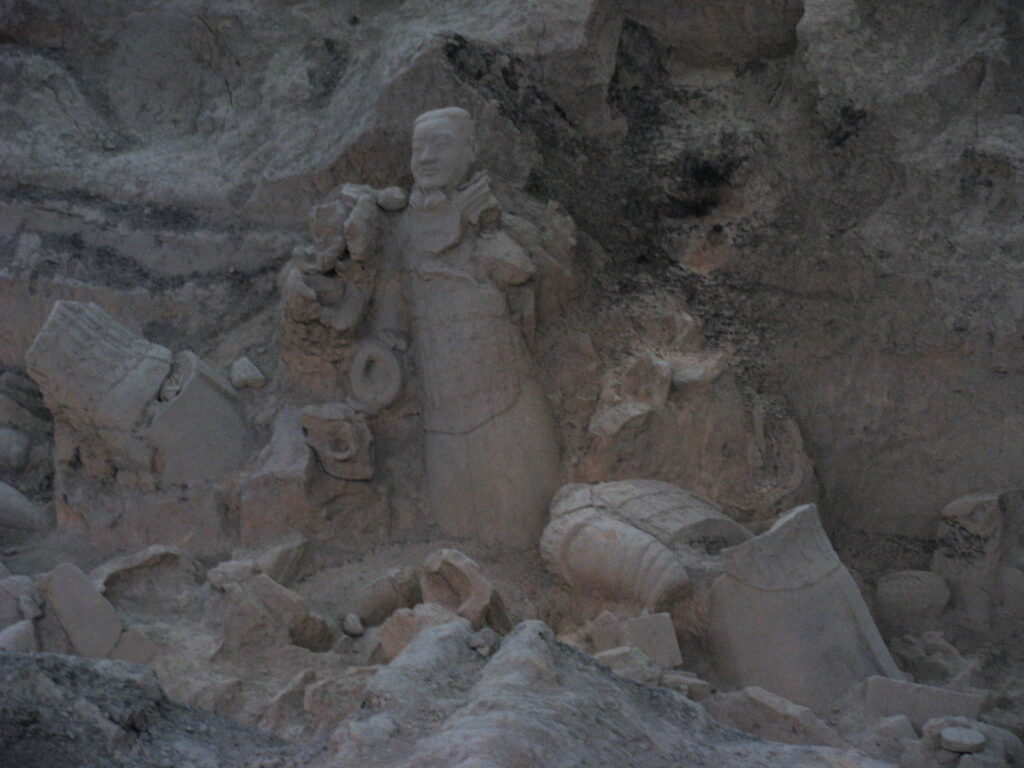
What to look for in the pits
Start with the overall setting. In Pit 1, the main impact comes from formation and scale, so it is natural to see the army first as a whole. Then look at nearer figures for differences in surface, posture, completeness, and the relationship between a figure and the ground around it.
Pit 2 often rewards a slower, more analytical look at individual details and excavation context. Use the recommended museum route order to avoid spending so long at the first railing that later sections become rushed.
Fragments, joins, and supports are not mistakes
When you notice a join line, a fragment group, or an area that is not reconstructed into a perfect silhouette, read it as part of the object’s journey. The figure has passed through burial, discovery, excavation, study, and conservation. A visible change in surface texture or completeness can tell you where that history remains legible.
Do not try to decide from a few metres away whether every mark is ancient or modern. Instead, use labels where available and focus on the larger lesson: museum presentation is balancing access, stability, and honesty about what survives.
How restoration changes the way you photograph the museum
A wide image of a pit is useful for scale, but a closer permitted image can show a more interesting story: a seam, a fragment edge, a surviving surface, or the contrast between an assembled figure and nearby material. Follow the current museum rules and do not hold a viewing position for a long time. The Terracotta Army photography guide has practical advice for handling reflections, distance, and crowds.
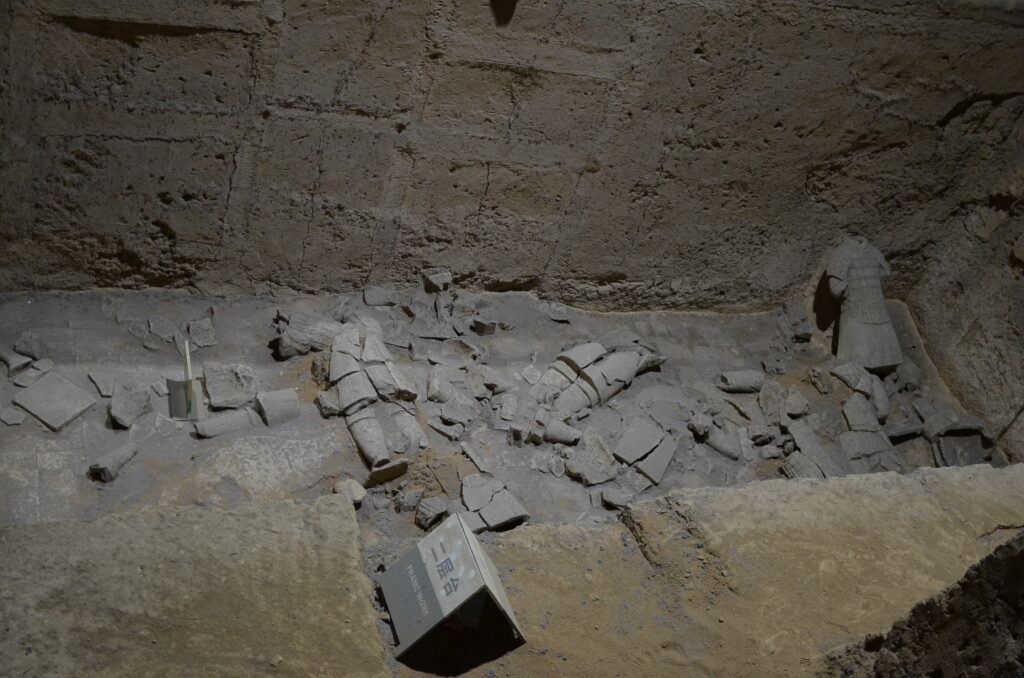
Would a guide help?
Restoration is one of the topics where interpretation can be particularly useful. A guide may help point out a detail that otherwise blends into the pit, while an audio guide can give you a reason to pause at the right moment. The audio guide versus tour guide comparison can help you choose the format that matches your visit.
Independent visitors can still get a great deal from the museum by arriving with one question in mind: what does this figure or fragment tell me that a perfectly complete statue would not? The first-visit museum guide keeps the rest of the route practical while leaving space for that kind of observation.
Official checks before you go
Confirm current visitor arrangements through the museum ticketing page and the Emperor Qinshihuang's Mausoleum Site Museum. The UNESCO listing for the Mausoleum of the First Qin Emperor gives the wider heritage context. Displays and work areas can change, so follow current signs and staff instructions at the museum.
Best recommendation
See the finished formations, but do not rush past the incomplete figures and fragments. Restoration is part of what makes the Terracotta Army real rather than theatrical. Once you understand that a break, join, or missing section can preserve valuable evidence, the museum becomes much richer.
Terracotta Army Weapons: What the Arrowheads and Swords Tell You
Look beyond the warriors themselves with a practical guide to Terracotta Army weapons: bronze arrowheads, swords, missing wooden…
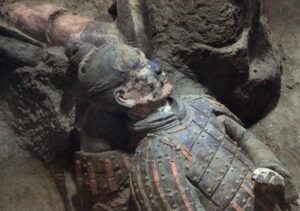
Why the Terracotta Army Looks Grey Today: The Story of Its Lost Colors
The Terracotta Army was originally painted. Learn why much of that colour disappeared after excavation, what visitors can…
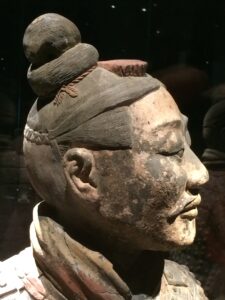
What to Notice at the Terracotta Army: Faces, Ranks, and Hidden Details
A practical guide to the Terracotta Army details first-time visitors should notice, including faces, hairstyles, armor, ranks, poses,…