The Terracotta Army is famous for its scale, but the visit becomes more interesting when you slow down and look for details. Faces, hairstyles, armor, shoes, poses, horses, ranks, broken sections, and restoration work all help explain why the museum is more than a hall of similar clay soldiers.
This guide is for first-time visitors who want to know what to notice once they are standing in front of the pits. It is not a deep academic catalogue. It is a practical viewing guide that helps you use your museum time better and avoid walking past the most meaningful details too quickly.
Quick planning snapshot
- Best first focus: start with the overall formation, then move to individual faces and body details.
- Best viewing habit: compare one warrior with another instead of looking at each figure alone.
- Easy detail to miss: differences in hair, armor, posture, and rank.
- Best route logic: use Pit 1 for scale, Pit 2 for variety, Pit 3 for command context, and the exhibits for craftsmanship.
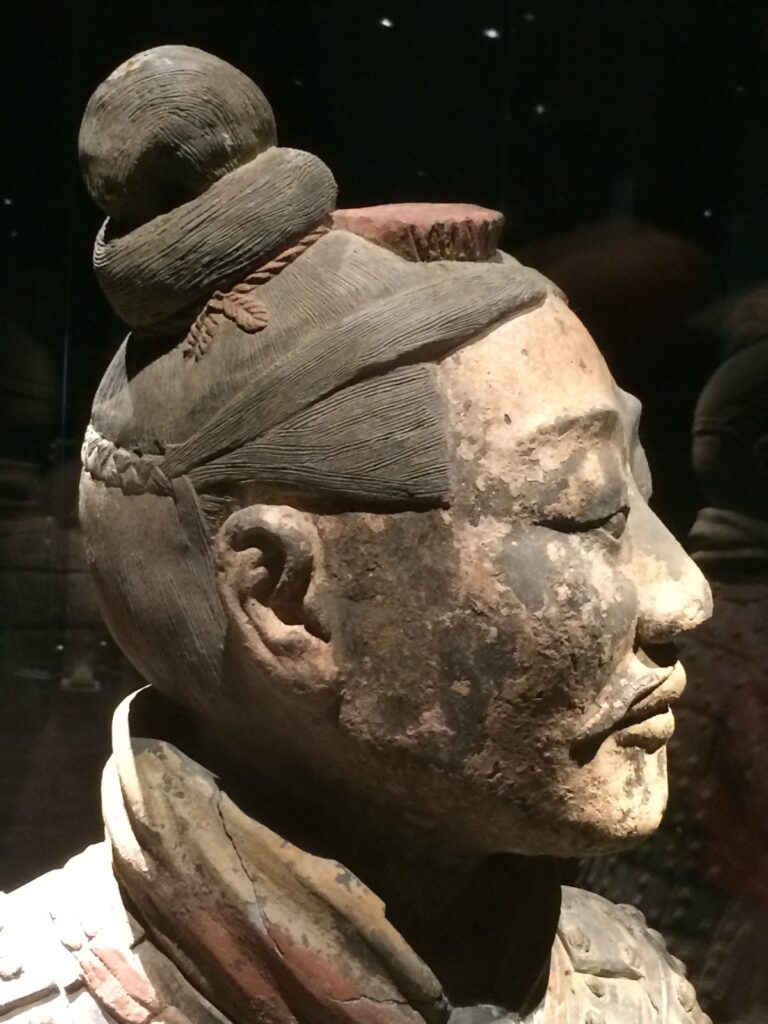
Start with the formation, not only the faces
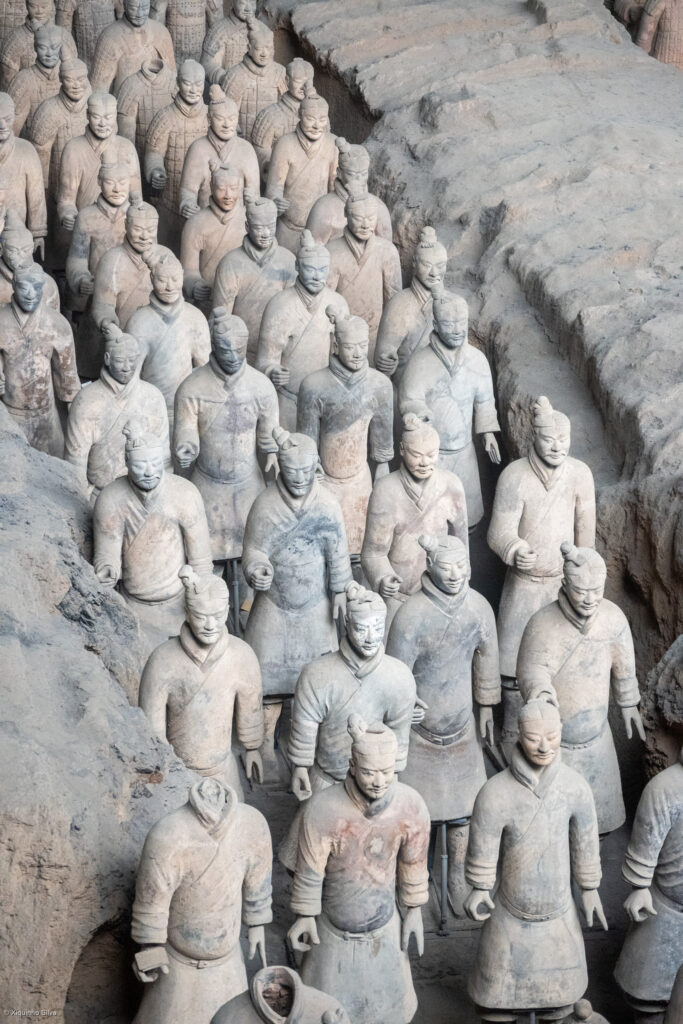
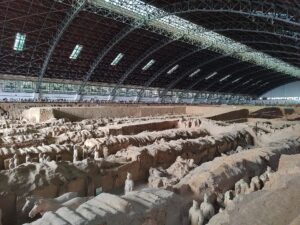
Many visitors begin by looking for individual faces, but the first thing to notice is the formation. The warriors were arranged as part of a military world, not as isolated statues. Rows, spacing, direction, horses, chariots, and command areas all matter because they show how the figures were meant to work together.
In Pit 1, step back before zooming in with your eyes or camera. The long lines of infantry are the main visual impact. Once you understand the scale, the individual details become more meaningful because each figure belongs to a larger formation. The Pit 1 guide is useful if you want to plan the strongest viewing order before arrival.
Look for different faces
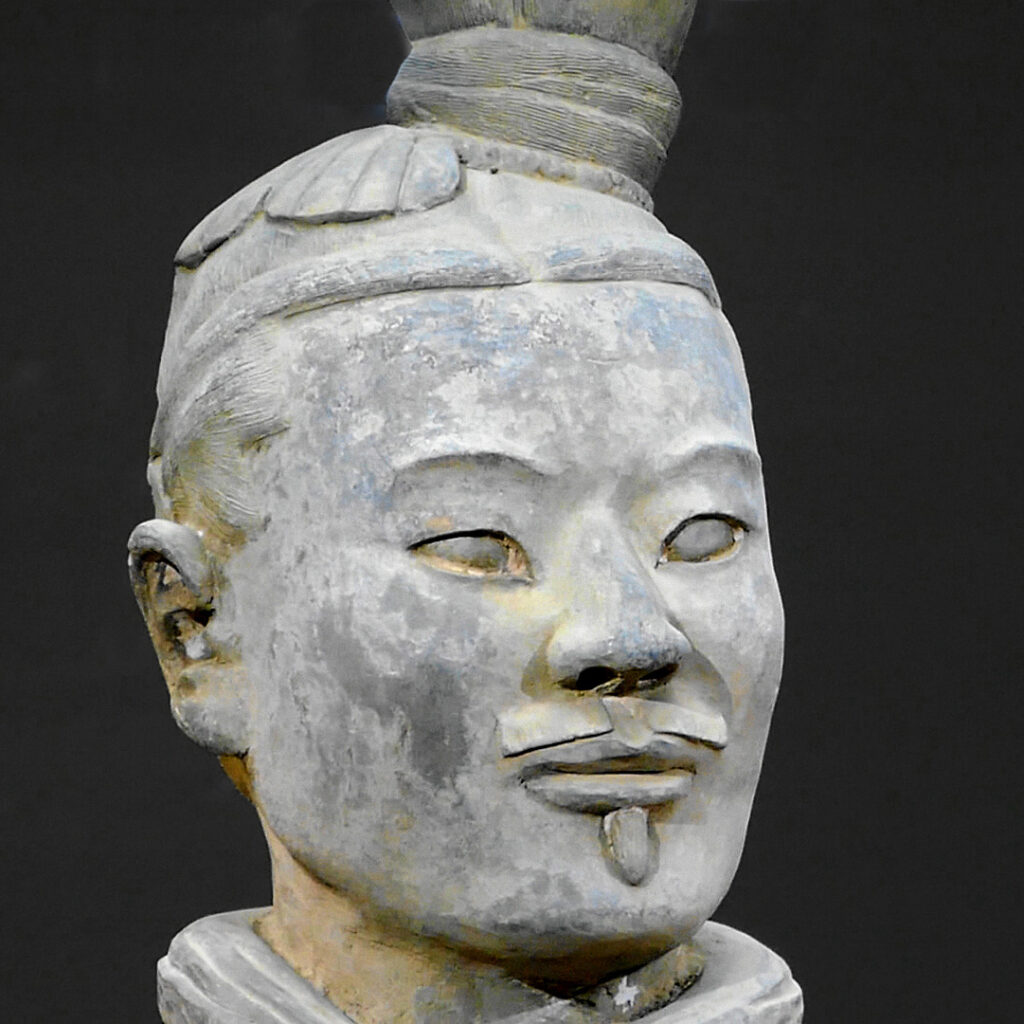
The warriors are often described as individual, and the faces do feel different when you compare them carefully. Look at cheek shape, eyes, nose, mouth, beard, expression, and head angle. Do not expect every face to be dramatically different from far away. The differences become clearer when you compare nearby figures or use a zoom lens from a legal viewing position.
A good habit is to choose two figures in the same area and compare them. Does one look older? Does one have a different facial hair style? Is the head shape or expression slightly different? This kind of comparison makes the museum feel less like a repeated pattern and more like a large group of crafted figures.
Hair and headwear tell you more than you expect
Hair is one of the easiest details to overlook. Some figures have visible hair knots, caps, or headwear that suggest role and status. The hair is not just decoration. It helps separate types of warriors and gives the figures a stronger human presence.
When viewing from a distance, do not try to study every head. Pick a small section and compare a few figures. This is much easier than trying to absorb the whole pit at once.
Armor, clothing, and rank clues
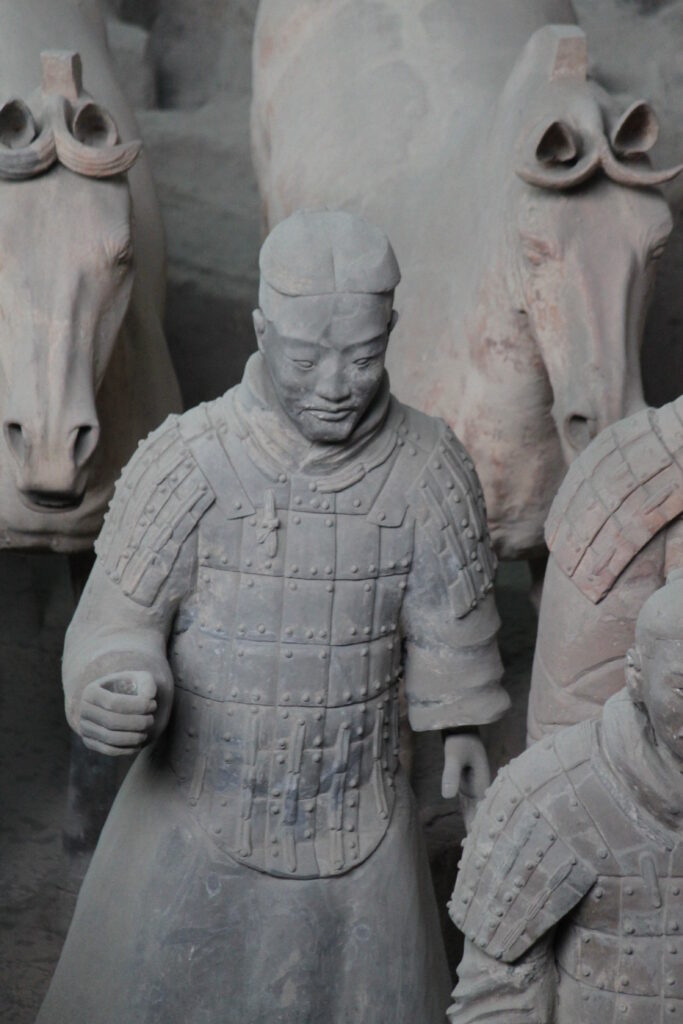
Armor and clothing are practical clues. Some figures appear more heavily armored, while others have different clothing, belts, collars, sleeves, or body positions. These differences help visitors understand that the army includes roles and ranks, not only rows of identical soldiers.
Look for how armor sits on the chest and shoulders, whether the figure seems ready to command or follow, and how the body posture changes from one type to another. If you want explanation while looking, the audio guide versus tour guide comparison can help you decide whether you need more interpretation on site.
Hands and poses reveal missing weapons
Some figures look as if they were made to hold something. Hands, arm positions, and stance can suggest weapons, reins, or battlefield roles even when the original objects are no longer in place. This is one reason the empty spaces around the figures matter.
Instead of asking only what is visible now, ask what the figure was designed to do. A hand shape, foot position, or body angle may point toward an original role in the formation.
Notice repair and restoration work
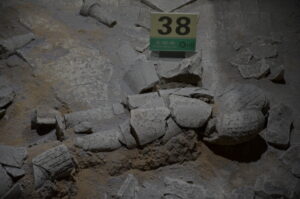
The Terracotta Army was not found standing perfectly as a complete display. Many figures and sections were broken, buried, collapsed, repaired, or still under study. Restoration is part of the story. When you see fragments, reconstructed bodies, or incomplete areas, those are not weaknesses in the visit. They show the archaeological process behind the museum.
This is especially important for visitors who expect the whole site to look like a finished exhibition. The power of the Terracotta Army comes partly from seeing both the ancient creation and the modern work needed to understand it.
Pit 1: scale and first impression
Pit 1 is where most visitors feel the scale of the army. It is the place to notice rows, depth, repetition, and the sense of a large organized force. Individual details are still there, but the main value of Pit 1 is the relationship between many figures at once.
Do not spend the entire visit trying to get one perfect photo. After the first wide view, move along the viewing area and let the angle change. Different sections reveal different details.
Pit 2: variety and unfinished context
Pit 2 often feels less dramatic at first, but it is valuable for detail-focused visitors. It helps show variety in the army and gives more context for different military roles. Some visitors rush it because it does not deliver the same immediate visual impact as Pit 1.
If you care about details, give Pit 2 enough attention. The Pit 2 guide explains why this quieter area matters and how to read it without expecting another version of Pit 1.
Pit 3: command context
Pit 3 is smaller, but it helps visitors understand command and organization. It is useful because it changes the question from how many warriors there are to how the underground army was structured. Smaller does not mean irrelevant.
Use the Pit 3 guide if you want to understand why this compact area deserves a stop. It is often more meaningful when you have already seen the scale of Pit 1 and the variety of Pit 2.
Do not skip the Bronze Chariots and exhibits
The warriors are the main attraction, but the exhibits can help you notice craftsmanship in a different way. The Bronze Chariots show detail, scale, technical skill, and burial symbolism that are easy to miss if you only think about clay soldiers.
If your time allows, use the Bronze Chariots guide before or after the pit route. It helps connect object detail with the broader Qin burial project.
How to look without getting overwhelmed
The museum can feel visually crowded even when the route is organized. You do not need to identify every figure type or remember every historical term. Choose a few detail categories: face, hair, armor, hands, posture, formation, and repair. Then look for those repeatedly as you move.
This approach makes the visit more active. Instead of waiting for signs or a guide to tell you everything, you begin to observe patterns yourself. If you later read more history, the details will connect more easily.
Best details for families and children
For children, turn details into simple questions. Which warrior looks older? Which one has a different hairstyle? Why are some figures broken? Where might a weapon have been? Why are there horses? These questions keep the visit lively without requiring a long lecture.
Adults can use the same method. The Terracotta Army is easier to remember when you leave with a few clear details rather than a blur of repeated figures.
Before-you-go checklist
- Read the basic museum route before arrival so you know where each pit fits.
- Start with formation and scale before focusing on individual faces.
- Compare nearby figures instead of trying to study the whole pit at once.
- Look for hair, headwear, armor, hands, posture, and repair marks.
- Give Pit 2 and Pit 3 enough attention if you care about context.
- Use official information for current entry rules, ticketing, and visitor flow.
Official checks
For current visitor information, use the Terracotta Army ticketing information and the Emperor Qinshihuang's Mausoleum Site Museum. Entry rules, visitor flow, access arrangements, and exhibit information can change, so check close to your visit date.
Best way to see the details
The best way to notice Terracotta Army details is to slow down without trying to become an expert. Look first at the army as a formation, then choose a few figures and compare faces, hair, armor, hands, and posture. Let the quieter pits and exhibits add context after the main Pit 1 impression.
When you do this, the Terracotta Army becomes more than a famous photo stop. It becomes a site where scale, craftsmanship, military order, and archaeology all appear in front of you at the same time.

Terracotta Army Museum Route Order: Which Pits to See First
Plan a practical Terracotta Army museum route order, including Pit 1, Pit 2, Pit 3, bronze chariots, crowds,…
Why Are There Walls Between the Terracotta Warriors in Pit 1?
The earth walls in Pit 1 reveal an underground structure, not just rows of warriors. Follow the corridors,…
Terracotta Army Restoration: How Broken Fragments Become Museum Figures
Learn how Terracotta Army fragments are documented, matched, stabilised, and reassembled, why incomplete figures still matter, and what…