The Terracotta Army is not a single room where visitors simply walk in, look around, and leave. The museum visit is spread across several large pit halls and exhibit areas, so the route order affects crowds, energy, understanding, and how much time you leave for details.
This guide gives first-time visitors a practical way to plan the Terracotta Army museum route order. It explains which pits to see first, when to slow down, when to keep moving, and how to avoid turning the visit into unnecessary backtracking.
Quick route answer
- Classic first visit: Pit 1 first, then Pit 3, Pit 2, and the major exhibit areas.
- Better for heavy crowds: follow on-site flow, but move steadily through Pit 1 before returning to details later if possible.
- Best for history interest: Pit 1 for scale, Pit 3 for command structure, Pit 2 for variety, then bronze chariots and special exhibits.
- Best for limited time: protect Pit 1 first, then choose one smaller pit and one exhibit rather than rushing everything.
- Main rule: do not spend all your energy in the first hall.
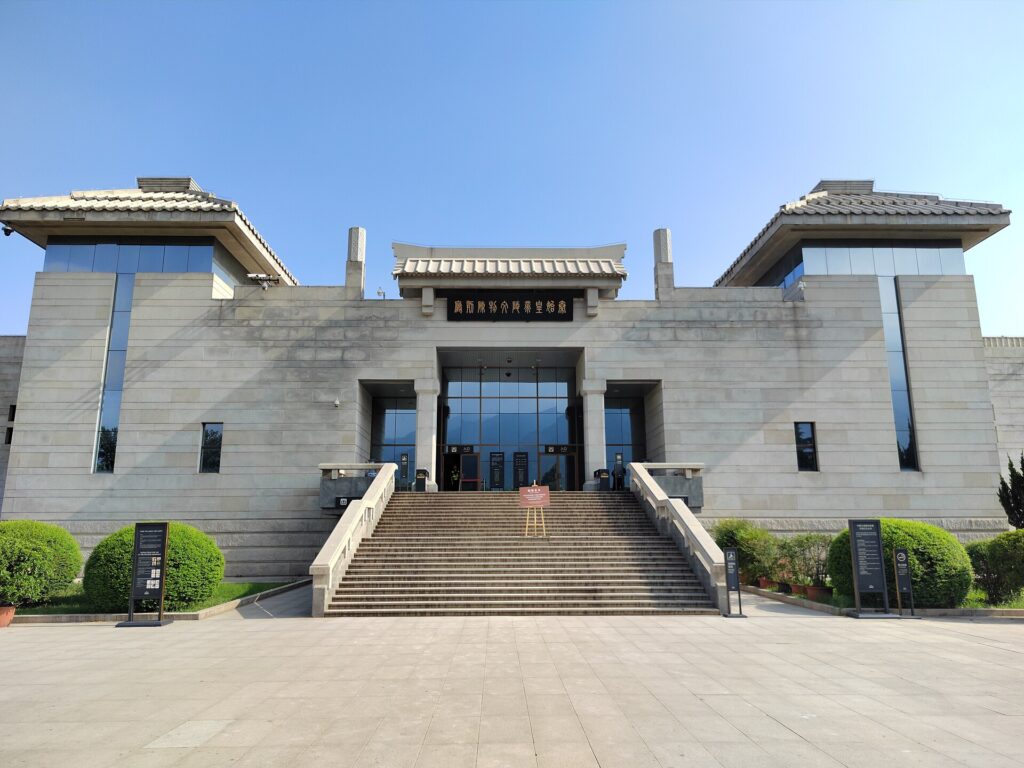
Why route order matters
Many visitors arrive with only one image in mind: rows of warriors in Pit 1. Pit 1 is essential, but the full visit makes more sense when you also see the smaller pits, command-related areas, excavation context, and major artifacts. If you linger too long at the first viewpoint, the later areas can feel rushed.
Start with the Terracotta Army museum guide for first-time visitors if you want a wider overview of the site before choosing a route.
Option 1: Pit 1 first
For most first-time visitors, Pit 1 first is the simplest and most satisfying choice. It gives the scale people came to see: long ranks, excavation areas, restoration zones, and the size of the original army formation. It also helps you understand why the site became famous.
The risk is over-staying. Pit 1 can absorb your attention, especially if the viewing rail is crowded. Give yourself enough time to take in the hall, then move on before the visit becomes one long wait for perfect photos.
For more detail on this hall, read the Pit 1 guide at the Terracotta Army before you go.
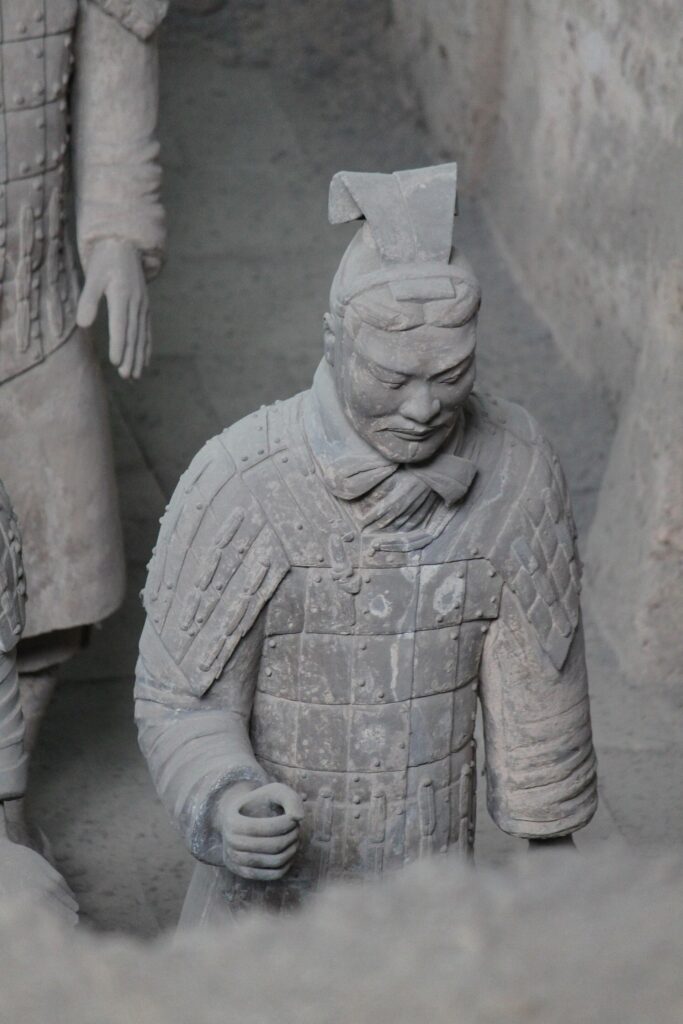
Where Pit 3 fits
Pit 3 is smaller, but it helps explain organization rather than only scale. Many visitors understand it better after seeing Pit 1 because they already have the main army image in mind. Pit 3 can feel underwhelming if you treat it as a smaller version of Pit 1, but it becomes more useful when you look for layout, command context, and horses.
If your group is already tired, Pit 3 is also a good shorter stop because it does not usually require the same level of time and patience as Pit 1. The Pit 3 guide explains what to look for in this smaller area.
Where Pit 2 fits
Pit 2 often feels more interpretive than dramatic. It can include different troop types, excavation context, and a more fragmented view of the army. Some visitors love it because it adds variety; others pass through too quickly because it does not match the immediate impact of Pit 1.
A useful route is Pit 1 first for scale, Pit 3 for structure, then Pit 2 for variety and excavation context. That sequence helps the visit feel like a story rather than a set of disconnected halls. The Pit 2 guide is useful if you want to slow down here.
Where the bronze chariots and exhibits fit
Do not leave the major exhibits as an afterthought if you care about craftsmanship and Qin history. Smaller artifacts can make the site feel more personal because they show detail, technology, and restoration work that is easy to miss when you only focus on the large pits.
If you are short on time, choose one exhibit area carefully instead of racing through every room. The bronze chariots guide explains why that exhibit is worth considering as part of the route.
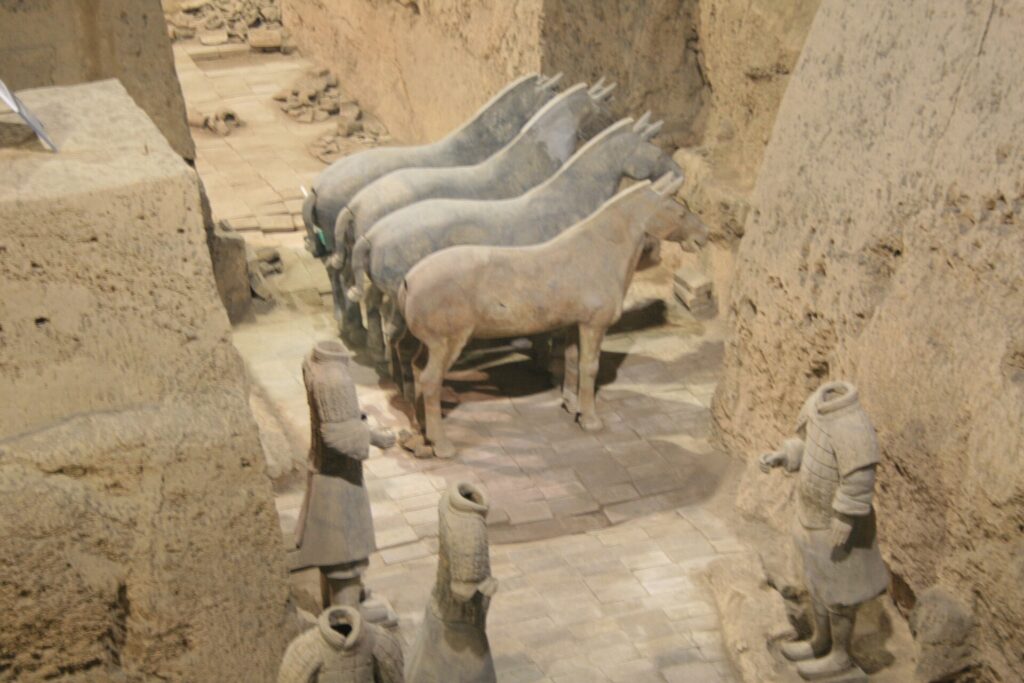
A practical 2 to 3 hour route
For a normal visit, a balanced route is: entrance and ticket check, Pit 1, Pit 3, Pit 2, bronze chariots or key exhibit area, restrooms or short break, then exit and transport. This order protects the main highlight while still leaving room for context.
If you are building the whole day around the museum, the Terracotta Army half-day itinerary can help you place transport, lunch, and return timing around this route.
If you arrive during a busy period
During holidays, school breaks, and peak tour-bus hours, route order may need to follow crowd control and on-site signs. Do not fight the flow just to follow a perfect plan. Instead, protect the essentials: see Pit 1, keep moving when a viewing rail is blocked, and use smaller halls or exhibits when the largest hall is congested.
For crowd strategy, read the Terracotta Army crowd avoidance guide. It is especially useful if you are choosing between morning, midday, and afternoon timing.
Walking, rest, and pacing
The museum route includes more walking than some visitors expect. The challenge is not only distance, but repeated standing at viewing rails and moving with crowds. Build in a short break before everyone is tired, not after the group has already lost patience.
The walking distance and route tips guide and the restrooms and facilities guide are useful if anyone in your group needs a slower pace.
Photography and detail stops
Do not let photography decide the whole route. Take a few key photos in Pit 1, then move on. Save energy for faces, ranks, horses, armor, restoration areas, and smaller exhibit details. The most memorable visit is often not the one with the most photos, but the one where you understand what you are seeing.
The guide to what to notice at the Terracotta Army can make each stop more meaningful without adding much time.
Entrance and exit timing
Route order starts before the pits. Security, ticket checks, walking from the entrance area, restrooms, and group meeting points can all affect the first 20 to 30 minutes. Leave a margin if you have a train, flight, or another Xi’an attraction later in the day.
Use the entrance and ticket check guide if you want to reduce uncertainty before reaching the pit halls.
Where shopping fits
Souvenir shopping is best after the core route, not before it. Buying early means carrying items through the halls, and browsing too long can steal time from the museum itself. If shopping matters to your group, leave it as a final optional stop.
The Terracotta Army souvenirs guide can help you decide what is worth buying and what may become a packing problem.
Common route mistakes
- Spending too long at the first crowded railing in Pit 1.
- Skipping smaller pits because they look less dramatic at first glance.
- Leaving exhibits until everyone is tired.
- Taking too many photos before understanding the layout.
- Ignoring restrooms, water, and walking distance until late in the visit.
- Buying souvenirs before the main route is finished.
Official checks
Before your visit, check the Terracotta Army ticketing information and the Emperor Qinshihuang's Mausoleum Site Museum for current opening, ticketing, and visitor-flow information. On the day itself, follow posted signs and staff guidance if route arrangements differ from your plan.
Best route order for most visitors
For most first-time visitors, the best route is Pit 1 first, then Pit 3, Pit 2, and the major exhibit areas, with a short break before the group gets tired. That order gives you scale, structure, variety, and detail without turning the visit into a rushed checklist.
Keep the plan flexible. The best route is the one that protects the main experience while still respecting crowds, walking distance, group energy, and your return schedule.
What to Notice at the Terracotta Army: Faces, Ranks, and Hidden Details
A practical guide to the Terracotta Army details first-time visitors should notice, including faces, hairstyles, armor, ranks, poses,…
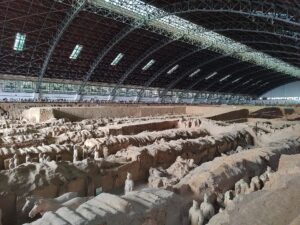
Why Are There Walls Between the Terracotta Warriors in Pit 1?
The earth walls in Pit 1 reveal an underground structure, not just rows of warriors. Follow the corridors,…
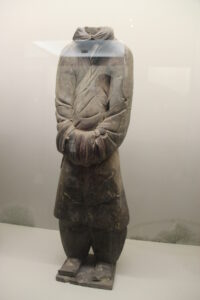
Qin Civil Officials at the Terracotta Army: What Pit K0006 Reveals
Discover the Qin mausoleum civil officials of Pit K0006: why their folded sleeves, charioteers, colours, and separate setting…