The Terracotta Army is famous for thousands of life-size figures, but the weapons are what make the scene feel like more than sculpture. Bronze arrowheads, swords, spearheads, dagger-axes, and crossbow components were found in and around the pits. They give visitors a clearer sense of equipment, organisation, and the material world that once surrounded the clay figures.
These objects are easy to miss if you only scan the main rows in Pit 1. Some are best understood in closer displays, while other clues are in the figures themselves: hands shaped to hold equipment, armour, posture, and the positions within a formation. A short pause for the weapons changes how you read the entire army.
Quick answer
- Were real weapons found with the warriors? Yes. Bronze weapons and weapon parts were excavated from the pits.
- What can you expect to see? Arrowheads, swords and other weapon-related material, depending on the displays open on your visit.
- Why are some hands empty? Some original non-metal components, including wooden parts, did not survive underground as well as bronze.
- Are all weapon stories visible from Pit 1? No. The large formation is essential, but smaller displays and closer interpretation help explain the equipment.
- Best strategy: see the pit formations first, then give a few minutes to any weapon display or label rather than treating it as a side note.
Why the weapons matter
The warriors were arranged as part of a larger burial complex for the First Qin Emperor. Their clothing, ranks, horses, vehicles, and equipment belong to one visual system. Weapons are evidence that the figures were not simply decorative attendants: they were designed to evoke an armed force, with different functions and positions.
Do not expect every figure to preserve a complete weapon exactly as it was held in antiquity. Bronze often survives differently from wood, bamboo, leather, and other organic materials. An empty-looking hand or a missing shaft is therefore not a reliable sign that a figure was never armed. The guide to ranks and hidden details can help you connect hands, posture, dress, and formation without trying to identify every object at a distance.
Arrowheads and crossbow equipment
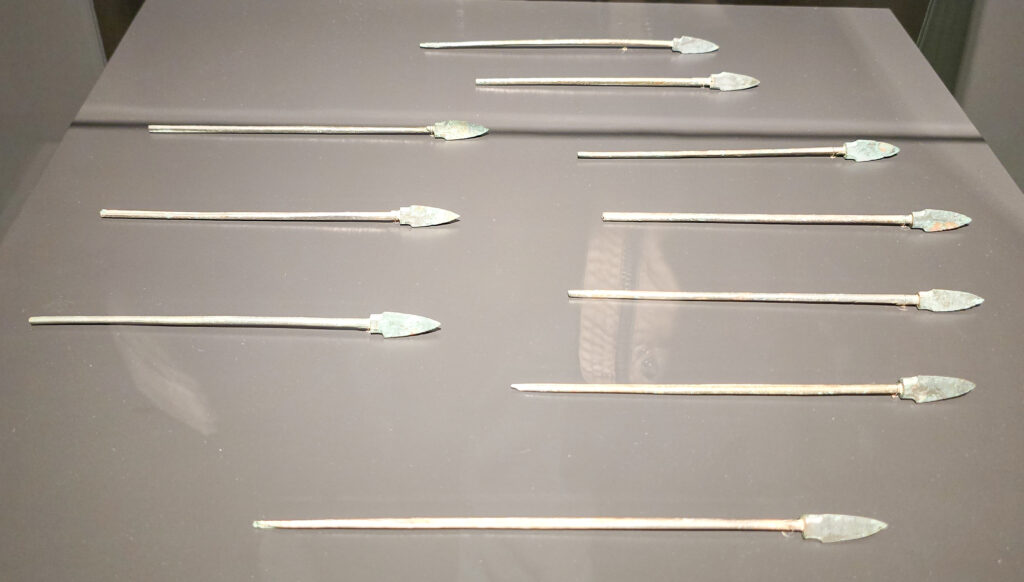
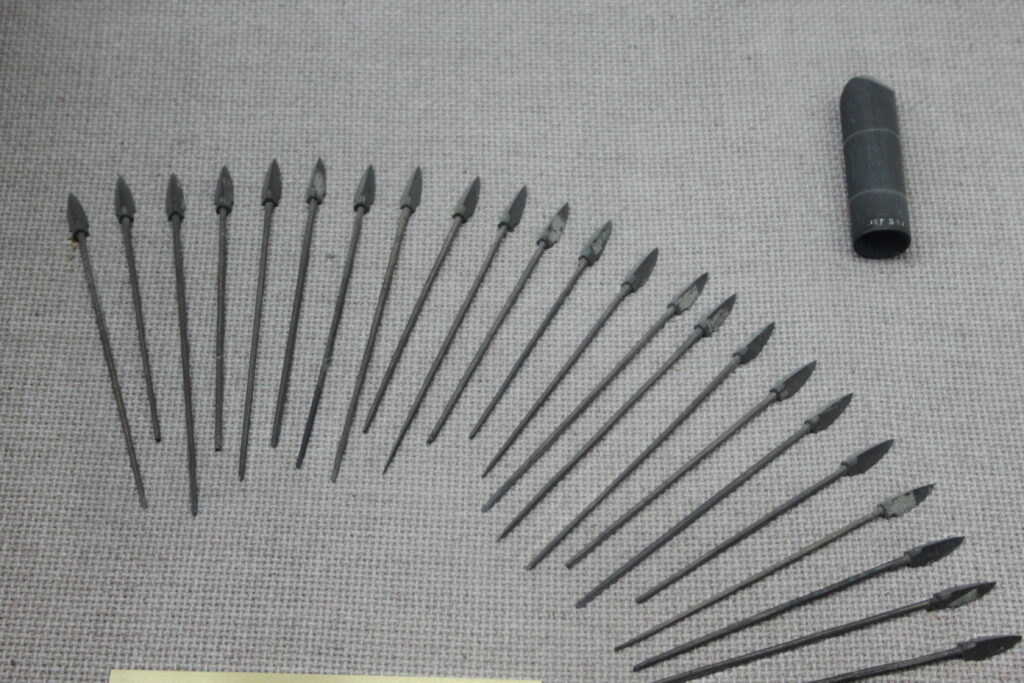
Arrowheads are among the most approachable weapon finds because they are compact and often displayed in groups. A row of small bronze pieces can look modest beside a full-size warrior, but it shows the practical scale of the equipment. Crossbow-related material also matters because it points to a military world that included ranged weapons as well as hand-held arms.
When you see arrowheads, look beyond the word “bronze” on the label. Notice whether the objects are arranged in sets, how consistent their form appears, and how much detail survives on something so small. This is a useful counterpoint to the huge visual impression of Pit 1.
Swords, shafts, and the parts that disappeared
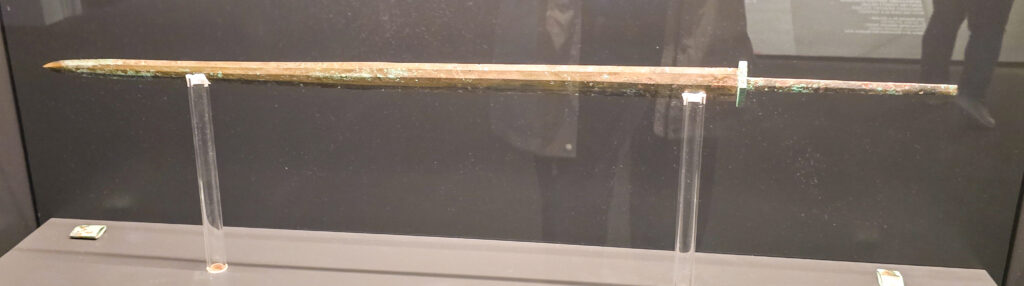
Bronze swords can survive as recognisable objects, which makes them particularly compelling in a case. By contrast, many long shafts, grips, scabbard elements, bows, and other non-metal parts were far more vulnerable during burial. The archaeological record is therefore uneven: what survives today is not always the whole item that a Qin-period soldier would have carried.
That is an important visitor lesson. The Terracotta Army does not offer a complete, untouched parade frozen in time. It is an excavated site, where surviving clay, bronze, soil marks, and empty spaces all have to be read together.
The old “chrome-plated sword” claim
You may encounter an old story that Qin weapons were deliberately chrome-plated to prevent corrosion. It is a memorable claim, but it should not be repeated as settled fact. Research has shown that chromium detected on some weapon surfaces is associated with nearby lacquer and is not evidence of a planned ancient chromium anti-rust treatment.
The more interesting truth is not a lost modern technology. It is the combination of bronze composition, burial conditions, archaeological context, and conservation that affects what has survived. For the technical evidence, see the peer-reviewed study on surface chromium on Terracotta Army bronze weapons.
Where to put weapons in your museum route
Start with the main pits so you understand the scale of the army before narrowing your focus. The recommended museum route order helps you keep that sequence practical. In Pit 1, concentrate on formation, posture, and the overwhelming size of the display. Then use later sections and object cases for closer questions about equipment.
Pit 2 is especially useful for visitors who want a more analytical second look at roles and military detail. Pit 3 adds a different scale and context. You do not need to become a weapons specialist to benefit from this order; you only need to give the smaller evidence a few unhurried minutes.
How to look at a weapon display
Choose one object or group of objects and ask four simple questions: what material is it, what part of the original weapon remains, what has probably disappeared, and how might it connect to a figure or formation nearby? Those questions are more useful than trying to memorise a long list of Chinese weapon names.
Labels and audio interpretation can be helpful here because the objects are smaller than the figures. The audio guide versus tour guide comparison can help you decide whether you want extra context on a first visit. If you prefer to move independently, read the first-visit museum guide before arrival and keep your attention on a few clear observations.
Photography and respectful viewing
Small metal objects behind glass can be harder to photograph than the open pits. Reflections, low light, and crowd movement are normal. Do not press toward a case or block another visitor for a close image, and follow current museum instructions for photography. The photography guide covers practical ways to make the most of permitted shots.
Official checks before you go
Confirm current arrangements through the museum ticketing page and the Emperor Qinshihuang's Mausoleum Site Museum. The UNESCO listing for the Mausoleum of the First Qin Emperor provides the wider heritage context. Displays can change, so use current museum labels and staff guidance for the objects available on your visit.
Best recommendation
Do not leave the Terracotta Army thinking only about faces and armour. Spend a few minutes with the arrowheads, swords, and other surviving weapon evidence. It gives the clay figures a more precise historical setting, and it makes the visit more rewarding without adding much time to your route.
Why the Terracotta Army Looks Grey Today: The Story of Its Lost Colors
The Terracotta Army was originally painted. Learn why much of that colour disappeared after excavation, what visitors can…
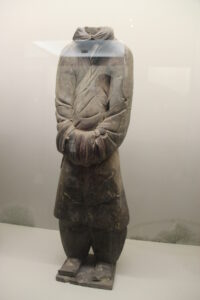
Qin Civil Officials at the Terracotta Army: What Pit K0006 Reveals
Discover the Qin mausoleum civil officials of Pit K0006: why their folded sleeves, charioteers, colours, and separate setting…
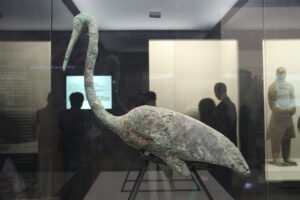
Bronze Water Birds at the Qin Mausoleum: Cranes, Swans, and Geese
A visitor guide to the bronze water birds from the Qin mausoleum: why cranes, swans, and geese matter,…