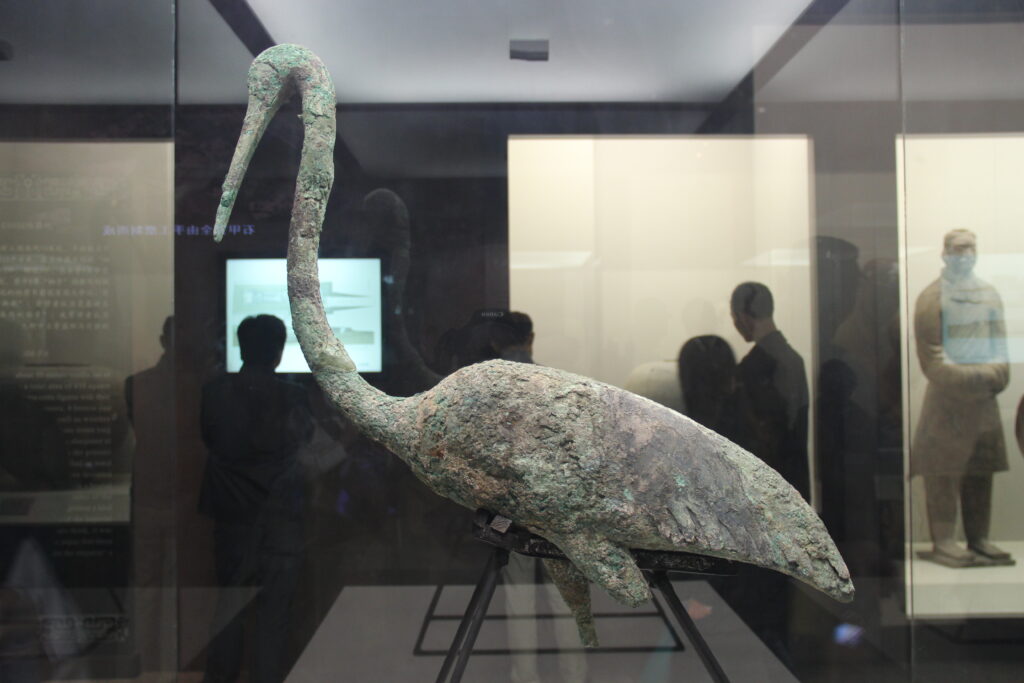
The Terracotta Army is usually introduced through ranks of armoured men, horses, and chariots. Yet the burial landscape of China’s First Emperor also included quieter objects: bronze water birds. Cranes, swans, and geese make a striking contrast with soldiers in formation, and they are one of the best reasons to think of the site as a much larger mausoleum complex rather than a single army display.
These birds are not from the three main Terracotta Army pits that most visitors see first. They came from another burial pit in the wider Qin mausoleum area. That distinction matters. The main pits help explain military organisation and spectacle; the water birds open a different question about the landscape, court life, craft, and ceremony that the burial complex was designed to evoke.
Quick answer
- Are the bronze water birds part of the main Terracotta Army pits? No. They were excavated from a separate pit in the wider Qin mausoleum complex.
- How many were found? A Stanford Archaeology research presentation reports 46 bronze water birds, including ducks, swans, and cranes.
- Why are they important? They show that the First Emperor’s funerary landscape included animal life and bronze sculpture as well as terracotta soldiers, horses, and vehicles.
- Can visitors always see a specific bird on display? Do not plan a visit around one object. Displays, loans, conservation, and access can change.
- What should visitors notice? Look at the bird’s posture, the metal surface, and how different its material is from the clay army figures.
The key distinction: the army pits and the mausoleum landscape
For a first visit, the three principal pits remain essential. In Pit 1, the scale of the formation is the point: ranks of figures, excavated earth, wooden structures, and an archaeological view that feels unusually direct. The bronze birds belong to a broader story around those pits. They should not be described as an unusual type of warrior, or as something visitors will automatically encounter beside the infantry.
The 1974 discovery guide explains why the warrior pits became world famous, while this guide to the Qin Shi Huang mausoleum helps put them back into their larger setting. Once you make that mental shift, a bronze bird stops looking like a curiosity and becomes evidence for the extraordinary variety of the funerary complex.
What was found in the water-bird pit
Research on the finds gives visitors a useful factual anchor. A Stanford Archaeology presentation on the First Qin Emperor’s water birds reports 46 bronze birds excavated between 2001 and 2003 from sacrificial pit K0007: 20 ducks, 20 swans, and six cranes. A China Culture report likewise describes 46 bronze waterfowl and 15 pottery figures from a satellite pit outside the mausoleum’s outer wall. The labels used for particular bird types can vary between accounts, so “bronze water birds” is the safest general term.
Those numbers are worth remembering, but they are not the whole experience. The presence of a group of metal birds changes how you picture the burial landscape. It suggests a scene with animal life, movement, and carefully chosen forms, rather than an underground world built only from armed men and weapons. Interpretations of the exact setting should remain cautious, but the contrast with the military pits is unmistakable.
Why bronze changes the story
Most visitors know the site through fired clay. The guide to how Terracotta Warriors were made is useful for understanding the technical achievement behind life-size ceramic bodies, assembled and finished at remarkable scale. A bird in bronze asks you to look for a different kind of expertise: casting, joining, surface finishing, corrosion, and conservation.
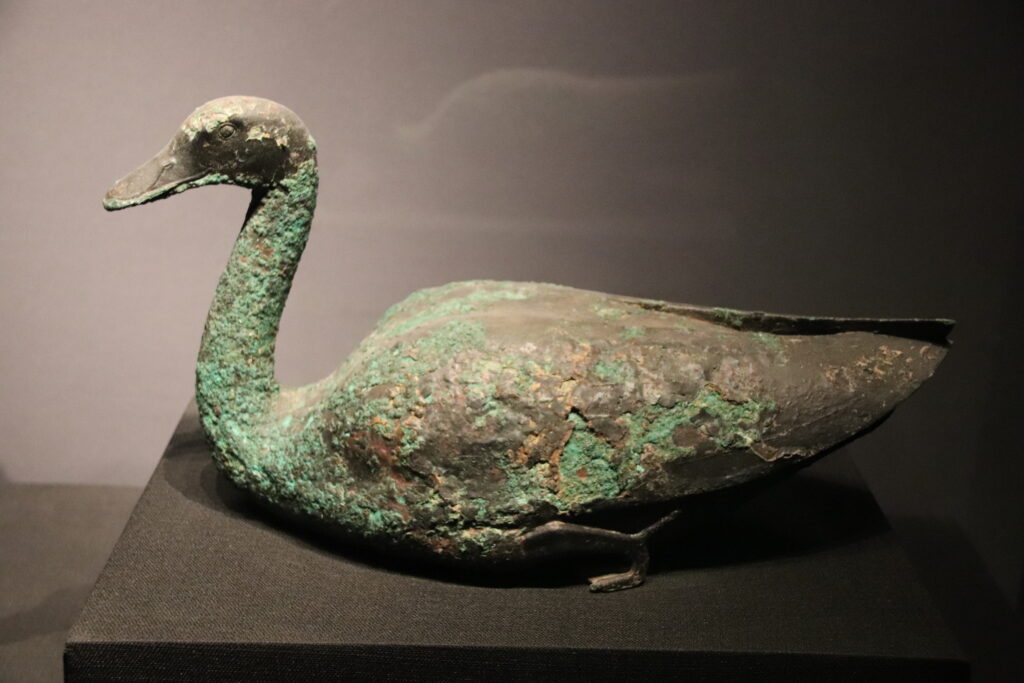
Bronze also changes the visual mood. Clay warriors are often read through clothing, armour, faces, and rank. A bird is read first through its silhouette: a long neck, folded wings, a lowered head, or a body poised above its legs. Those quiet gestures make the animals feel unexpectedly close to observation of the natural world, even though they were made for an imperial funerary setting.
Look beyond the green and brown surface
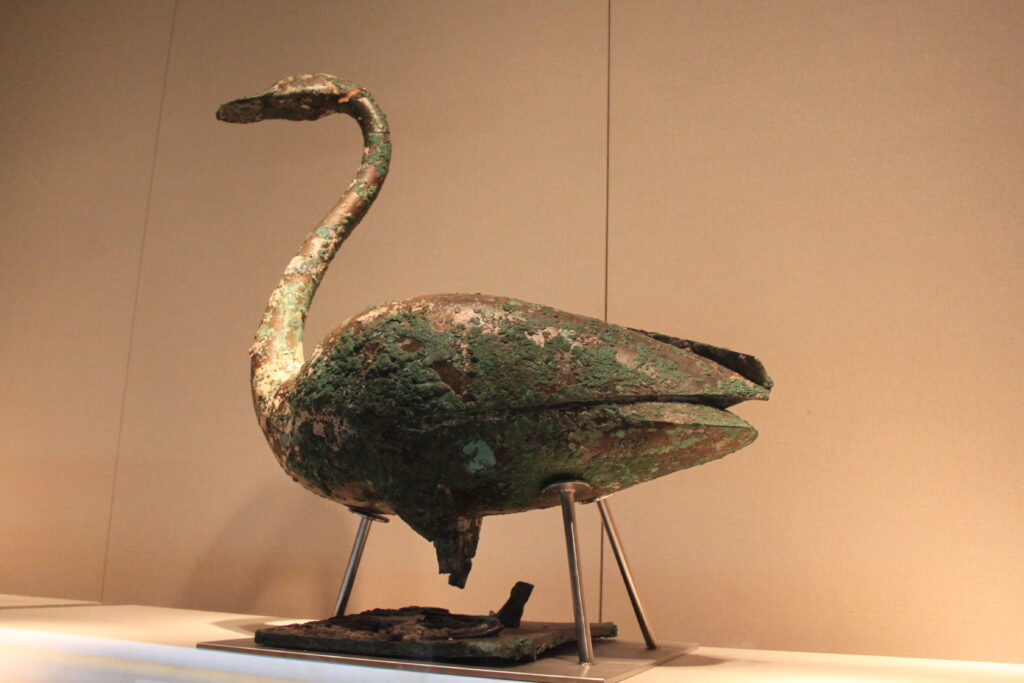
Bronze objects seen today may look dark, green, brown, or mottled after burial and conservation. That surface is part of their archaeological history, but it is not necessarily how they originally appeared. The Stanford presentation notes evidence for coloured pigments on the birds. This is a helpful parallel to the Terracotta Army lost colours guide: the familiar grey or green seen in a gallery may conceal a more complex original finish.
Do not try to reconstruct a precise original colour scheme from one photograph. Instead, use the idea as a reminder that burial conditions, excavation, cleaning, and conservation all affect what is visible today. The same patient approach helps with repaired warrior fragments, explained in the restoration guide.
How the birds fit with chariots, horses, and people
The birds are part of a larger pattern of variety at the mausoleum. The famous army includes horses and vehicles; the wider complex includes officials, performers, animals, and other objects that complicate any simple “buried army” description. The bronze chariots guide makes a good companion here. It shows another way bronze was used to create a controlled, highly detailed image of imperial movement and status.
It is tempting to turn all of these finds into one literal map of daily life or one confirmed ceremonial scene. Archaeology is rarely that tidy. A stronger approach is to keep the categories clear: soldiers, horses, chariots, water birds, and human figures were selected for different purposes, and specialists continue to study their relationships. The variety itself is the firm conclusion.
A practical way to use this on a museum visit
Start with the first-time museum guide and the recommended museum route order. Let the main pits establish the essential visual experience. After that, use unfamiliar objects and displays to widen your attention. When you see an animal figure, a bronze object, a pigment trace, or a carefully restored fragment, ask what it contributes that the ranks of soldiers do not.
This also gives photographers and repeat visitors a better focus. Rather than trying to recreate the standard Pit 1 image, look for material contrast and scale: fired clay beside bronze, a military figure beside an animal form, or a broad formation beside a small detail. It produces a more personal record of the visit and a more accurate understanding of the site.
What not to assume
Do not assume that every bronze bird is permanently displayed, that the water-bird pit is part of the standard main-pit route, or that every modern label uses exactly the same species name. It is also better not to claim that the birds prove one single, fully decoded palace scene. The archaeological evidence is rich, but careful language preserves the difference between what has been found and what is still being interpreted.
That restraint does not make the birds less compelling. On the contrary, they are memorable because they make the wider mausoleum feel less formulaic. They introduce water, animal life, craftsmanship, and quiet observation into a site most people first associate with formations and force.
Sources and current visitor checks
For the research context, read the Stanford Archaeology presentation on the First Qin Emperor’s water birds and the China Culture report on the bronze waterfowl. The UNESCO listing for the Mausoleum of the First Qin Emperor gives the wider heritage context.
Before travelling, confirm admission and current visitor arrangements through the museum ticketing page and the Emperor Qinshihuang’s Mausoleum Site Museum. Follow current on-site information for exhibitions and access.
Best recommendation
Keep one bronze water bird in mind as you explore the Terracotta Army. It is a small but powerful correction to the usual mental picture of the site. The soldiers are indispensable, but cranes, swans, and geese help reveal the First Emperor’s burial complex as a broader imagined world, built from many materials and many kinds of life.
Qin Civil Officials at the Terracotta Army: What Pit K0006 Reveals
Discover the Qin mausoleum civil officials of Pit K0006: why their folded sleeves, charioteers, colours, and separate setting…
Terracotta Army Acrobats and Strongmen: The Figures Beyond the Soldiers
Meet the Qin mausoleum acrobats and strongmen: why they are different from the Terracotta Army soldiers, what Pit…
How Terracotta Warriors Were Made: Clay, Molds, and Details to Notice
A clear guide to how Terracotta Army figures were made: prepared clay, repeatable production steps, hand-finished details, firing,…