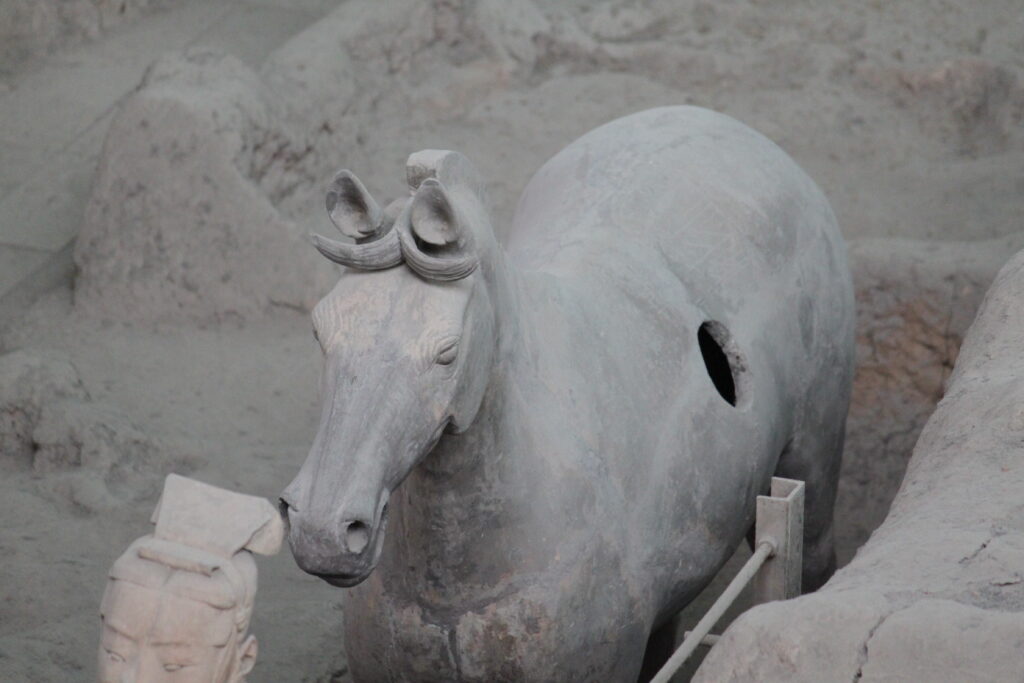
It is easy to remember the Terracotta Army as rows of human figures, yet the horses are among the most revealing parts of the museum. They bring movement, transport, command, and equipment into the scene. A close look at a horse can show a carefully modelled face, mane, ears, tail, harness details, and a relationship to the people around it that is hard to see in a quick pass through the pits.
The horses also help visitors understand that the army was not one uniform formation. Some are associated with chariots, while others belong to cavalry contexts. You do not need to identify every rank or harness component to enjoy them. A few simple observation points make the horses much more than background figures.
Quick answer
- Are there horses at the Terracotta Army? Yes. Horses appear in different military and transport contexts within the wider archaeological display.
- What should you look for first? The head, ears, mane, tail, posture, and the way a horse relates to nearby figures or equipment.
- Where are they most useful to notice? In the main pit setting for scale and formation, then in closer views where harness and modelling are easier to read.
- Are these the same as the bronze chariot horses? No. Terracotta horses and the bronze chariots are different objects with different materials and display stories.
- Best approach: use the horses to slow down for one close observation after you have taken in the larger formation.
Why the horses matter
The horses give the Terracotta Army a more complete military and ceremonial setting. They suggest mobility and organisation rather than a simple line of infantry. Their presence also changes the scale of the figures around them: a life-size horse beside a warrior makes the human sculptures feel less like isolated statues and more like part of a structured group.
Look for the interaction between a horse and nearby people. A horse is rarely just an animal placed for decoration. Its stance, head position, and equipment relate to a wider arrangement. The guide to ranks and hidden details can help you turn those visual clues into a more deliberate museum visit.
Chariot horses and cavalry horses
For a visitor, the most useful distinction is context. Chariot horses belong with vehicles and the people who would have managed them. Cavalry horses belong with mounted figures and create a different type of military image. You do not need to memorise every label before arriving; simply ask what role the horse seems to play in the group you are looking at.
That question prevents a common mistake: treating every horse as interchangeable. The differences in placement, equipment, and surrounding figures are part of the story. In Pit 2, a slower look can be especially rewarding for visitors who want to move beyond the most familiar views of Pit 1.
What to notice on the horse itself
Start at the head. Ears, muzzle, eyes, and the mane give each sculpture a strong presence even from a moderate distance. Then step back enough to notice the neck, body, legs, and tail. A side view often makes the posture much clearer than a frontal photograph.
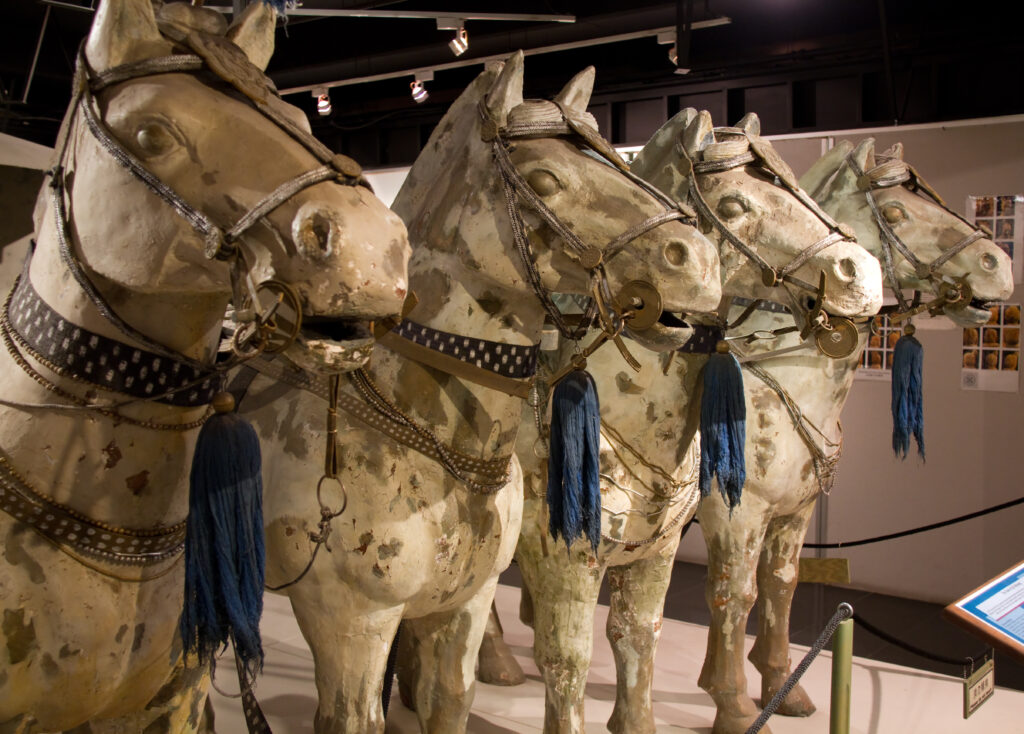
Next, look for harness-related details. Not every original component survives in the same way after burial and excavation, so read the visible material with care. What matters is the overall impression of a horse prepared for a role, not an attempt to reconstruct every missing strap from a distant viewing rail.
Terracotta horses are not the bronze chariots
The museum also has famous bronze chariots and horses, but they should not be folded into the same category as the life-size terracotta horses in the pits. The material, scale, and display experience are different. The bronze objects reward close attention to metalwork and vehicle design, while the terracotta horses help you read formation, modelling, and the relationship between people and animals.
Use the bronze chariots guide when you want to compare the two without confusing them. Seeing both can be one of the most satisfying ways to understand how many kinds of craftsmanship are represented at the site.
Where to fit horses into your route
Begin with the overall museum route, not with a search for one particular horse. The recommended route order protects the major sights first. In Pit 1, take in the scale of the formation before looking for individual animals. In later sections, give yourself permission to slow down where the view is clearer.
Do not skip Pit 3 simply because the horse images are elsewhere. Each pit adds a different perspective on the wider complex, and the contrast makes the animal figures easier to place in context.
A useful two-minute viewing method
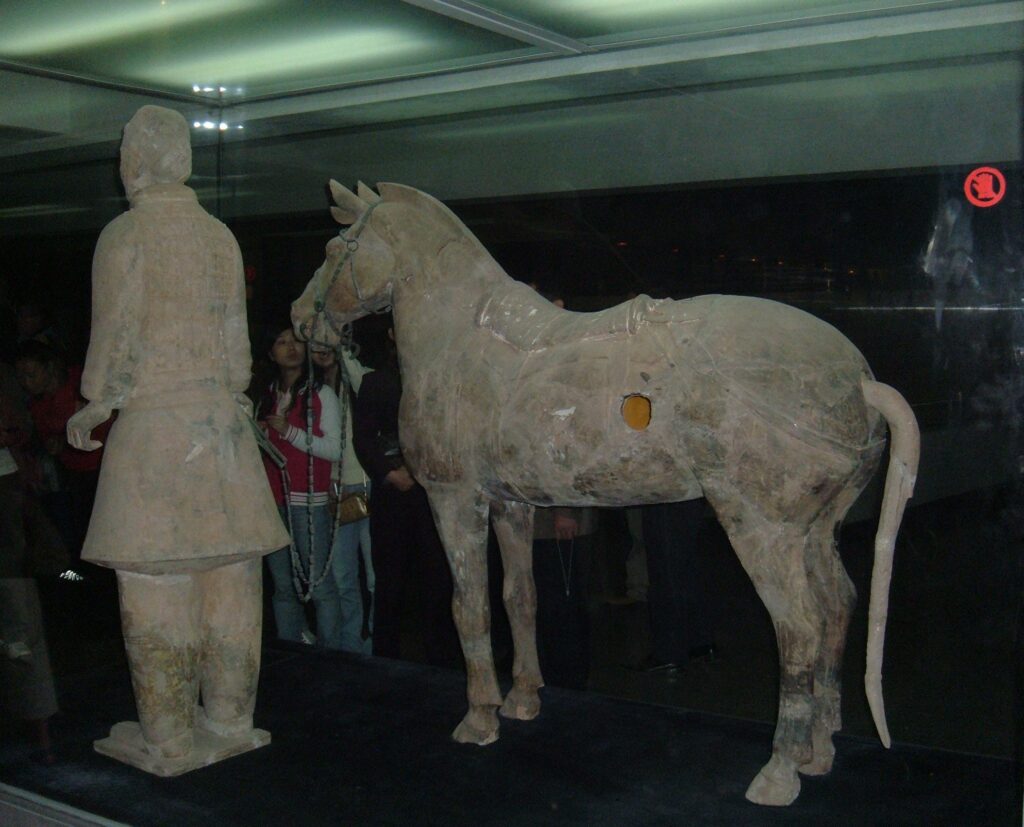
First, view the horse as part of a group: what stands beside it, behind it, or in front of it? Second, choose one feature such as the mane, ears, tail, or harness and look at it for a few seconds. Third, step back and compare the animal’s scale and posture with the warrior nearby. That short sequence is enough to give your photographs and memories more substance.
Photography tips for the horses
Horse details can be easier to photograph than crowded ranks of faces, but glass, viewing rails, and uneven light still affect the result. Do not rush a close-up if it blocks another visitor’s view. A side angle often works better than a head-on image because it captures the whole body and more of the surrounding context. The photography guide covers practical ways to manage reflections and crowds.
Would an audio guide or guide help?
Horses are a good reason to use interpretation if you enjoy historical context. A guide can point out an arrangement you might otherwise pass, while an audio guide lets you pause where the sightline is best. The audio guide versus tour guide comparison explains the tradeoff. Independent visitors can get the same benefit by arriving with a small list of details to notice rather than trying to absorb every label.
Official checks before you go
Confirm current visitor arrangements through the museum ticketing page and the Emperor Qinshihuang's Mausoleum Site Museum. The UNESCO listing for the Mausoleum of the First Qin Emperor provides wider heritage context. Displays and viewing access can change, so follow current signs and staff instructions on the day.
Best recommendation
After you have taken in the famous ranks of warriors, spend a few focused minutes with the horses. Look at one head, one side profile, and one relationship between a horse and a human figure. That small shift turns the Terracotta Army from a line of statues into a much more vivid world of movement, transport, and command.
Qin Civil Officials at the Terracotta Army: What Pit K0006 Reveals
Discover the Qin mausoleum civil officials of Pit K0006: why their folded sleeves, charioteers, colours, and separate setting…
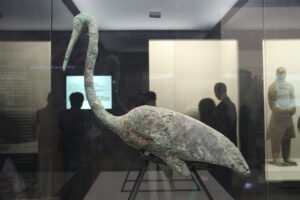
Bronze Water Birds at the Qin Mausoleum: Cranes, Swans, and Geese
A visitor guide to the bronze water birds from the Qin mausoleum: why cranes, swans, and geese matter,…
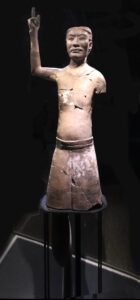
Terracotta Army Acrobats and Strongmen: The Figures Beyond the Soldiers
Meet the Qin mausoleum acrobats and strongmen: why they are different from the Terracotta Army soldiers, what Pit…